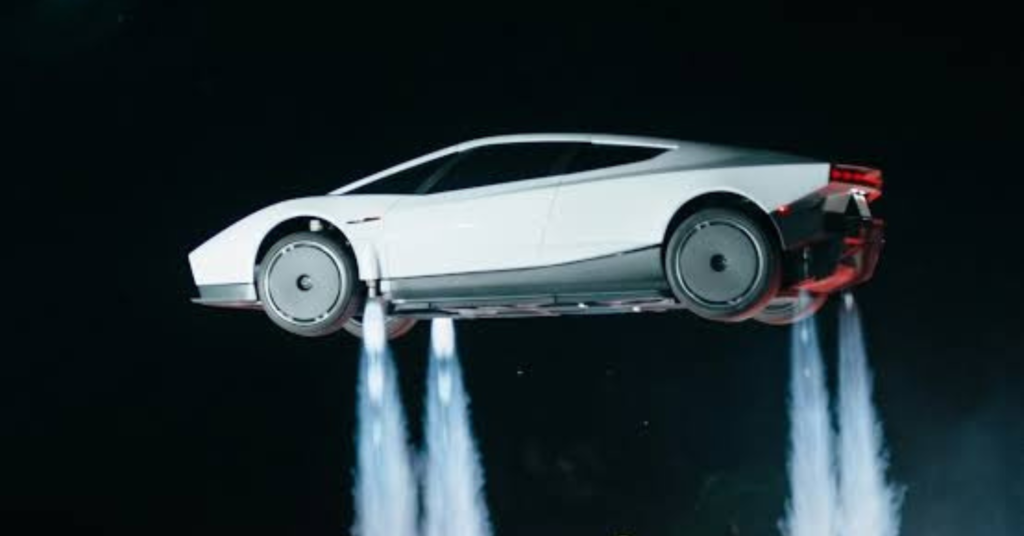
Tesla has promised a new Roadster for almost nine years. On October 15, 2026, it finally showed one, and the car performed a barrel roll and jumped over other cars. The one thing it didn’t do was go on sale.
A quick history of a very long wait
The original Roadster is where Tesla’s story starts. Tesla released the first Roadster in 2008 and kept it on sale until 2012. It was the first highway-capable all-electric sports car, and it proved EVs could be fast and desirable. Tesla later refreshed it, announcing the Roadster 2.5 in 2010 with a new front fascia, a rear diffuser, and better seats. foxbusinesstesla
Then came the sequel. Tesla first showed the next-generation Roadster in November 2017 and promised production in 2020. That date slipped, and so did 2022, 2023, 2024, and 2025. In 2026, the unveiling itself kept moving. Musk teased a “banger next-level” unveil in March, hoping for April. The event was then set for October 1 in Texas, but Tesla called it off on September 28, citing weather, and rescheduled it for October 15. Tesla sets Roadster event for Thursday after nearly 9 years of delays +2
The reveal
The event took place at a SpaceX test site in McGregor, Texas, and felt more like a stunt show than a car launch. The prototype drove up a curved ramp shaped like half a roller-coaster loop, launched off it, cleared five other Teslas, and landed softly using cold-gas thrusters. Tesla also demonstrated a barrel roll and a suction system that lets the car drive upside down. NBC News insideevs
Before the demo, Musk hedged: “success is not guaranteed,” he said, before adding that it would “probably” work. Afterward, he told the crowd that the future does have flying cars.
The specs we know so far
- Acceleration: Tesla claims 0–60 mph in 0.81 seconds. Musk called the number the “least interesting part” of the car. insideevsfoxbusiness
- Downforce: Tesla’s VP of engineering, Lars Moravy, said the car can generate up to 2Gs of suction, which Musk says will help it break track records. insideevs
- Thrusters: The cold-gas thrusters come from the Tesla–SpaceX collaboration. The most extreme version is described as the invite-only “air-ready” Rocket model, a single-seater with thrusters along the car’s perimeter. NBC News
- Production: Musk said production would not begin until 2028. NBC News
The questions Tesla didn’t answer
The gaps are as notable as the demo.
- Price: No price was announced, and Tesla didn’t disclose specs for the other performance variants. Earlier coverage pegged the car at roughly $200,000, but that figure isn’t confirmed. CNBC
- Street legality: It’s unclear whether the car will be street-legal. The flying features aren’t approved for public roads. CNBC News
- Range, battery and more: There are no details on range or much else. insideevs
- Reservations: One headline notes that Tesla “cannot guarantee” a pre-order will ever be delivered. Given the history, anyone with money down should read that carefully.
What it means
It’s a halo car. A $200,000-class two-seater won’t move Tesla’s sales numbers. Its job is to make the brand look like it’s from the future, and a car that hops over a row of Teslas does that.
It deepens the Tesla–SpaceX overlap. The shared engineering has added to speculation about a possible Tesla–SpaceX merger. That’s speculation, not an announcement. CNBC
Skepticism is earned. A working prototype is not a production car. Every delivery date so far has been missed, and 2028 is still two years away. The demo was real, but a car that can do a stunt on a controlled ramp and a car you can buy and drive to the shops are very different products.
The Tech Behind the Tesla Roadster: Suction Fans, Cold-Gas Thrusters and a 1 MW Powertrain
The new Roadster’s stunts come from two main systems. A fan-based suction system pins the car to the ground, and a set of compressed-gas thrusters pushes it through the air. Under both sits a very fast-charging battery and a rear-drive powertrain. This post covers how each works and where the numbers disagree. Specs are still coming out after the reveal, and different outlets are reporting different figures.
1. The suction system: grip without speed
Most downforce in racing comes from wings, which need speed to work. The Roadster does it differently. Tesla says a multi-mode fan and ground-sealing system pulls air out from beneath the car, creating enough suction to hold it upside down even when parked. Engadget
- The fans: Fans in the rear diffuser pull air from under the car, and the display showed 4,700 kilograms of downforce as the car climbed the ramp. trendingtopics
- The seals: Tesla’s engineering VP Lars Moravy calls it a “sucker system” with four independent skirts sealing the car to the road. teslanorth
- Why it matters: Moravy put the limit for tires alone at roughly 1.26 G. Suction adds grip on top of that, which is how Tesla expects to break track records. paultan
- Not brand new: The idea of sealing the underbody and sucking the car down has a long history. One analysis traces it to Jim Hall’s 1970 Chaparral 2J. tech-insider
2. The cold-gas thrusters: a rocket with no fire
The thrusters are the part that borrows from SpaceX. Nothing is burned. Compressed air is stored in carbon-fiber overwrapped pressure vessels (COPVs) and released through nozzles. Other reports say the gas is mainly nitrogen. Moravy said “nitrogen seemed like a good fuel” for a car. trendingtopicsteslanorth
The concept is old. Cold-gas thrusters work by releasing stored high-pressure gas through a nozzle, with no combustion, and NASA used the same principle for attitude control in the 1960s. The Roadster’s version is built for a heavy road car. Tesla says “making them work in a vehicle instead of a vacuum took all-new hardware & controls”. tech-insiderTechCrunch
Control. The thrusters use all-electric actuators, which Tesla says allow micro adjustments in a fraction of a second. That speed is what lets them steer and stabilize the car in the air rather than only push it forward. It’s worth knowing that the stunts at the event were programmed into the vehicle. EngadgetEngadget
The trims. The thrust hardware depends on the version:
- Performance: The road-legal base version has no thrusters and relies on the suction fans and active aerodynamics. Tesla lists 0–60 mph in under 1.6 seconds. trendingtopicsteslarati
- Thrust: “Race ready,” seats two, with rear-mounted cold-gas thrusters and 0–60 in under 0.9 seconds. teslarati
- Rocket: “Air ready,” seats one, with 10 thrusters around the car. Tesla’s page cites a 0–60 time under 0.59 seconds, and says it isn’t approved for public roads. Tesla reveals SpaceX-powered Roadster that flies and falls with style +2
The tank numbers. Reports differ here:
- Moravy said 10 thrusters share 600 liters of compressed air. TechCrunch
- In a Hagerty interview, he described a 200-liter tank holding up to 10,000 psi of nitrogen on the Thrust version, producing over 80 kilonewtons. The Rocket adds another 400 liters and six more thrusters. teslanorth
- A track screen in Tesla’s photos showed a 5,500 psi thruster readout. That may be the operating pressure, while the 10,000 psi figure may be the vessel’s capacity. paultan
Refilling. Musk said the car can recharge its air tank and “puff itself up,” but Tesla didn’t say how or how long it takes. Another report says the Thrust tank can currently be filled in two to six hours with a high-pressure nitrogen system. paultanyahoo
How long can it fly? Tesla hasn’t said. An independent physics estimate suggests that hovering would use up the air very quickly, and thrust drops as tank pressure falls. Treat that as an outside estimate, not a Tesla figure. The practical takeaway is that flight is a short burst, not sustained flying. cellcog
A safety footnote. TechCrunch noted that COPVs are the same type of vessel that has been at the root of multiple SpaceX rocket explosions. Storing that much pressure in a road car is a real engineering and regulatory challenge. TechCrunch
3. Battery, motors and charging
Without any thrusters, the Roadster is still a serious EV.
- Drivetrain: Rear-wheel-drive only, around 3,700 pounds. It also uses steer-by-wire with a yoke. yahooteslarati
- Power: Reports disagree. One says even the standard car makes 1 MW, about 1,340 hp. Another cites over 1,073 hp for the base variant. Final production numbers may differ from both. notateslaappbasenor
- Battery: Tesla’s 4680 cells in aluminum cans, with double-sided cooling and a titanium upper plate. The pack is rated at 800–1,000 volts and uses nickel-based cells developed for this car. Tesla hasn’t shared the kilowatt-hour capacity. Tesla’s Engineering VP Explains How the New Roadster’s Fans, Wings and Thrusters Work +2
- Charging: Up to 500 kW input from a V4 Supercharger, with 15% to 85% in about 10 minutes, according to Moravy. insideevs
- Range: Claimed at over 300 miles. One report puts real-world range at 310–320 miles. That’s about half of the 2017 promise of roughly 620 miles (998 km). teslanorthyahoo
4. Who built what
Moravy says everything except the SpaceX thrust and flight packages is Tesla’s own, including the battery, powertrain, chassis, body structure, and suction system. So the headline-grabbing thrusters are SpaceX tech, while the fans, seals, and EV hardware are Tesla’s. teslanorth
What’s still unproven
- Independent testing. The 0.81-second 0–60 and the downforce figures are Tesla’s claims, not tested results.
- Production feasibility. The target is 2028 at Giga Texas. gettesla
- Regulation. The Rocket trim isn’t approved for public roads. gettesla
- Cost. Reserving the Rocket reportedly takes a $250,000 deposit, according to Engadget. Engadget